United Kingdom / journal
3D Body Scanning & Point Cloud Mesh Modeling
Practical guide to 3D body scanning technology, point cloud volume modeling and depth camera scanning for precise body shape estimation and anthropometric 3D measurement.
3D body scanning technology is changing how we measure and understand the human body. From clothing fit and health checks to sports science and ergonomic design, tools like depth camera scanning, point cloud volume modeling and 3D surface reconstruction are making measurements faster and more accurate. This article explains the basics in plain language, how point cloud processing works, what point cloud mesh modeling means, and how body shape estimation is achieved for real-world uses in the UK.
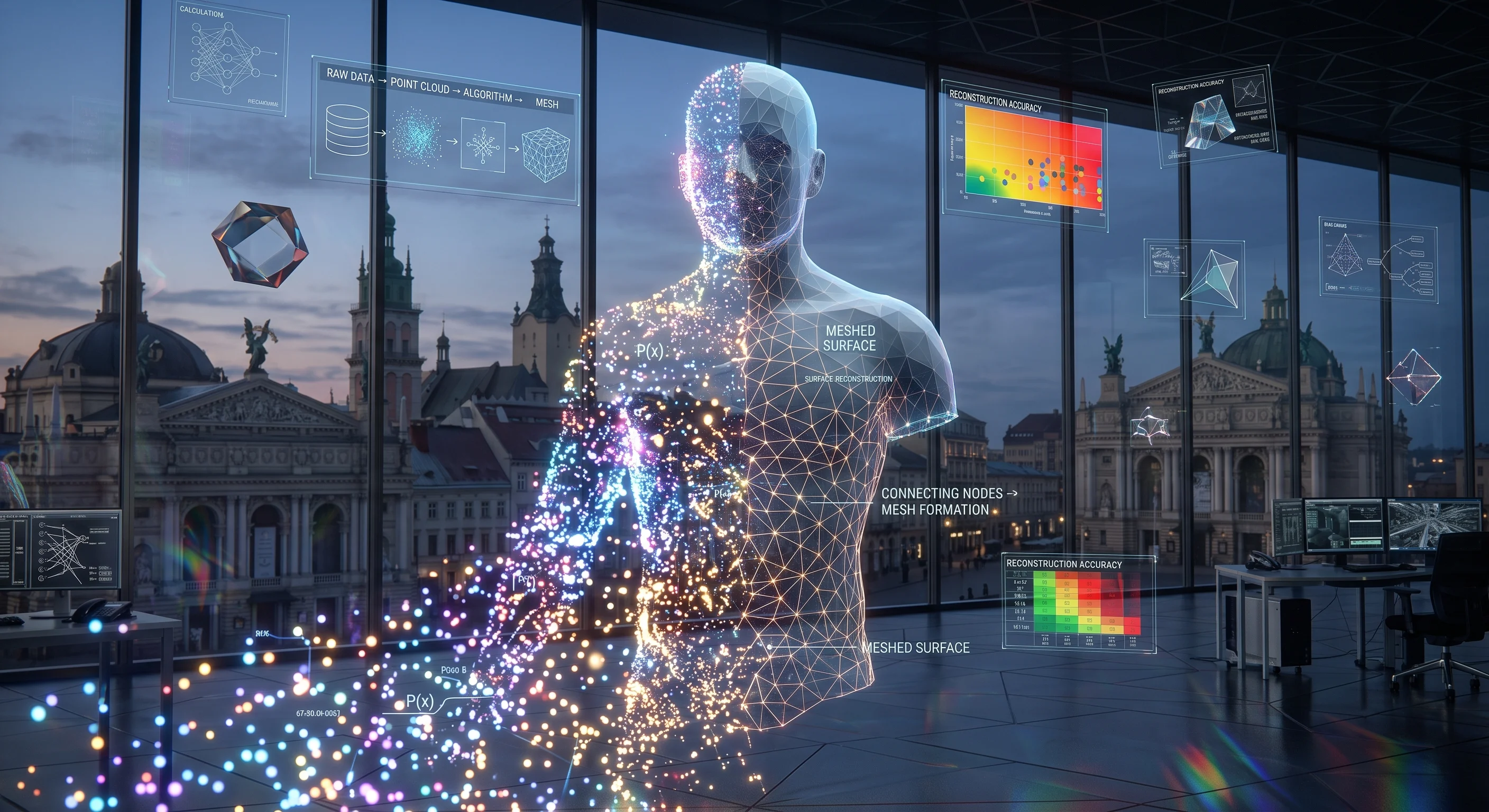
What is 3D body scanning technology?
How depth camera scanning works
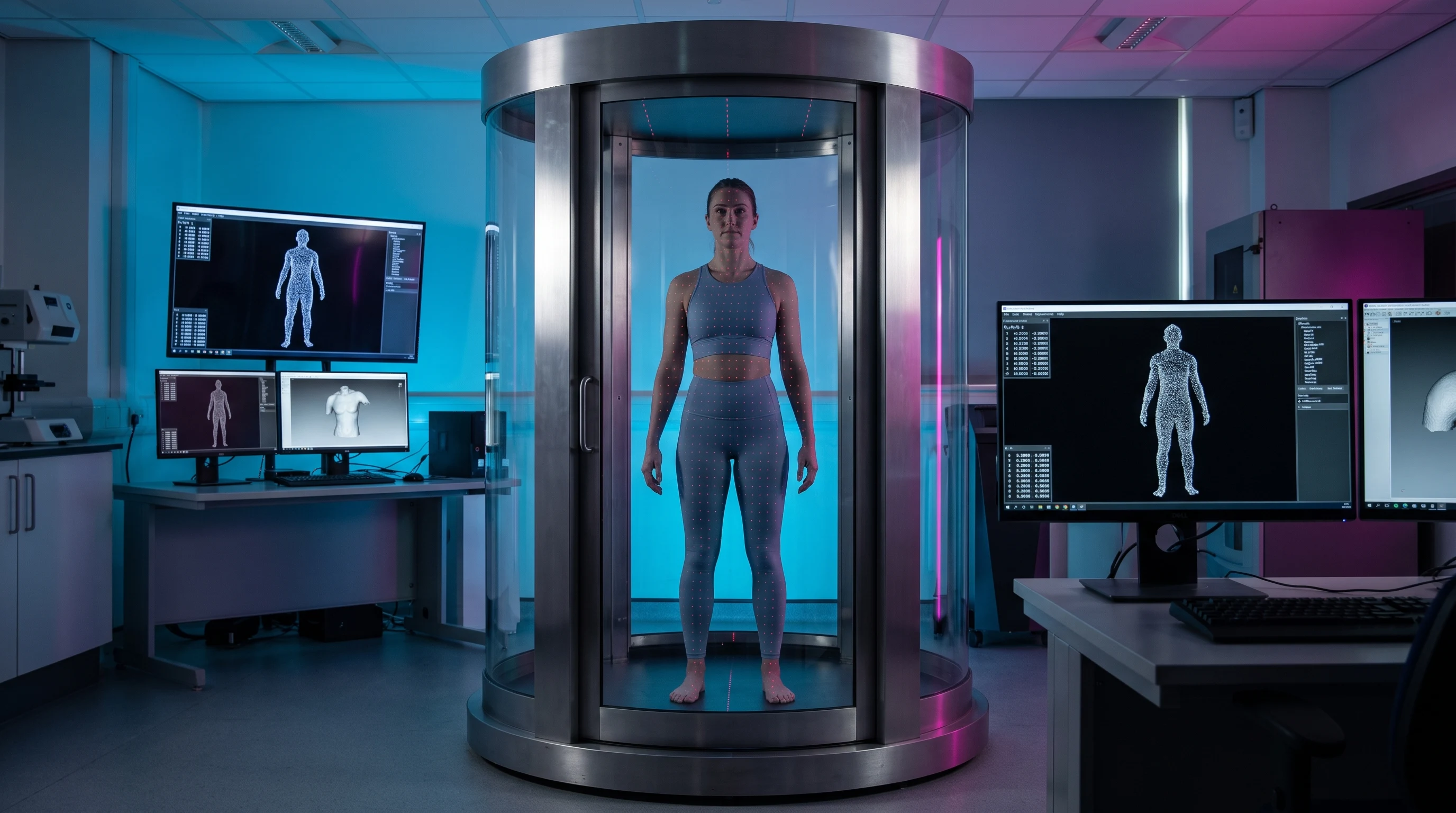
Depth camera scanning is one common approach. These cameras capture not just colour but distance information for every pixel. Popular depth cameras use infrared light and time-of-flight or structured-light techniques to measure how far each point on the body is from the camera. Multiple frames as the person turns or multiple cameras around the person give a full 360-degree view. Depth camera scanning is affordable and fast, so it’s widely used in retail fitting rooms and consumer-focused applications.
Point cloud basics: what you need to know
A point cloud is simply a list of 3D coordinates (x, y, z). Each point represents a tiny patch of the surface. Raw point clouds can be noisy or sparse depending on the scanner, lighting and movement. Point cloud processing cleans up that raw data: it removes outliers, fills small gaps, aligns multiple scans, and resamples points so they are evenly distributed. Understanding point cloud processing is key to getting reliable measurements and good-looking models.
From point cloud to mesh: 3D surface reconstruction
Point cloud volume modeling becomes usable when you convert points into a connected surface, called a mesh. Mesh modeling links points into triangles or polygons to create a continuous skin over the body. This 3D surface reconstruction step can use algorithms like Poisson surface reconstruction, marching cubes, or Delaunay triangulation. The finished mesh makes it easy to visualise the body, calculate surface area, and prepare models for virtual try-on or 3D printing.
Volumetric measurement and biomechanics
Once you have a clean mesh you can calculate volumes — for example, limb volume for tracking muscle mass, or torso volume for garment sizing. Volumetric measurement biomechanics combines these measurements with movement analysis to understand function and performance. In sports science, tracking volume and shape changes over time helps coaches monitor progress. In healthcare, small volume changes can indicate swelling, fluid retention or recovery after surgery.
Body shape estimation and anthropometric 3D measurement
Body shape estimation uses the mesh and statistical models to infer standard anthropometric measurements such as waist, chest, hip circumferences, limb lengths and body mass distribution. Anthropometric 3D measurement is more consistent than manual tape measurements because it reduces human error and captures shape in a single pass. For clothing retailers and designers in the UK, this means better sizing libraries, improved fit for customers, and fewer returns.
Accuracy, limitations and common errors
Point cloud processing steps: a practical overview
Processing a point cloud typically follows a sequence: capture, cleaning, registration, reconstruction, smoothing and measurement extraction. Capture is the scanning phase. Cleaning removes spurious points from the background or moving objects. Registration aligns multiple scans into one coordinate system. Reconstruction converts the aligned points into a mesh. Smoothing reduces small surface noise without losing important shape details. Finally, measurement extraction computes circumferences, volumes and landmark positions used for body shape estimation and anthropometric 3D measurement.
Software and open formats
Many software packages handle point cloud processing and mesh modeling. Common open formats like PLY, OBJ and STL store point clouds or meshes for exchange between tools. For UK organisations it’s helpful to adopt interoperable formats so measurements and models can be shared across design, retail and medical teams. Some systems include built-in analysis for anthropometry, while others require additional plugins or scripting to extract specific metrics.
Applications in retail, health and performance
Practical applications are growing fast. Retailers use 3D scanning to offer personalised sizing, virtual try-on and made-to-measure garments. Health services employ body scanning to monitor rehabilitation, measure limb volumes for lymphedema, or track body composition changes. In sports and biomechanics, scanning helps with custom equipment, assessing symmetry, and measuring muscle development. In the UK, these applications can help reduce waste in fashion, improve patient care and support elite athlete development.
Choosing the right setup for your needs
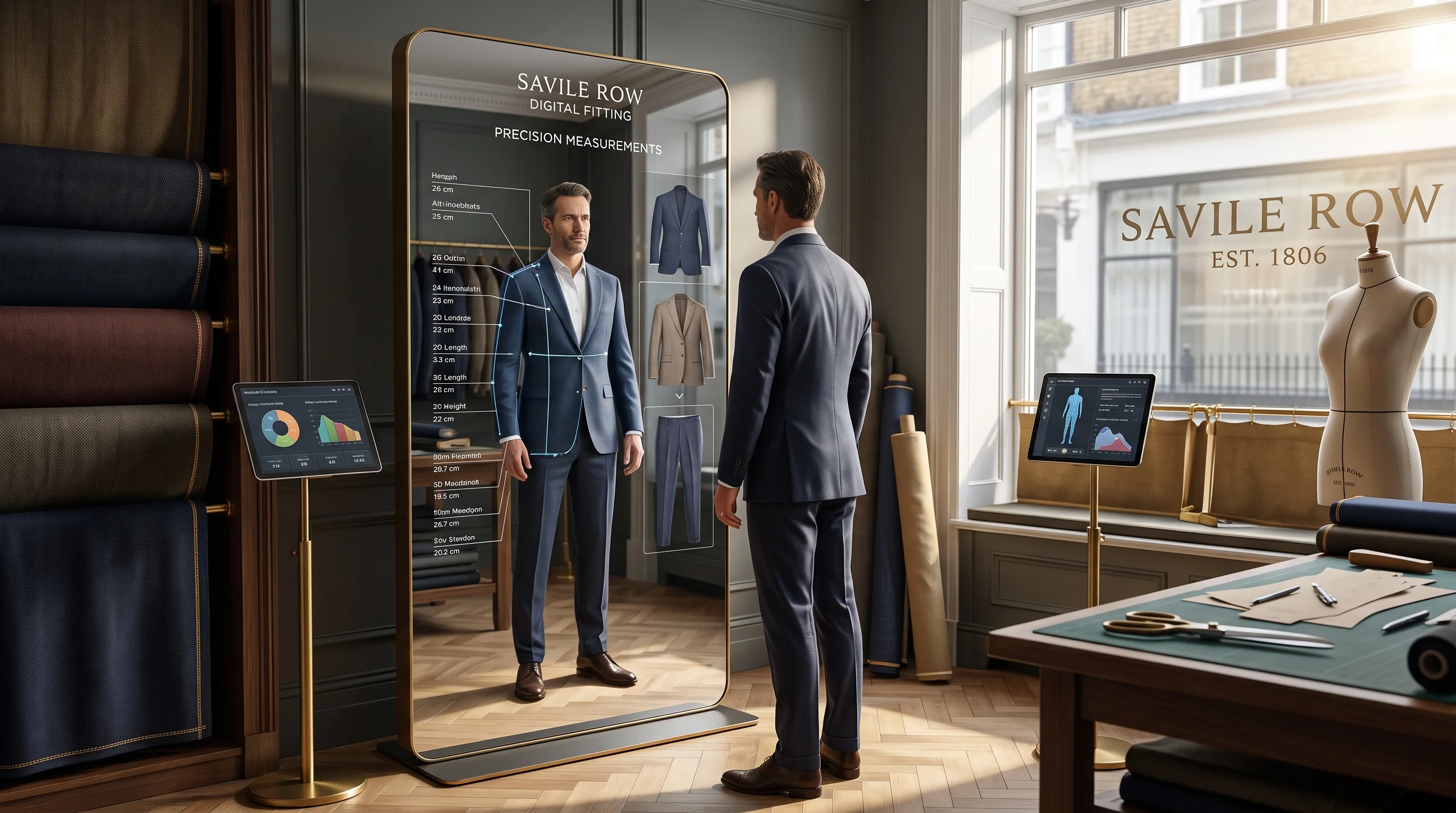
Choice depends on goals and budget. For fast consumer-facing services, depth camera scanning rigs with several low-cost cameras provide a good balance. For medical or engineering-grade measurements, higher-resolution scanners or structured-light systems are better. Consider the capture environment: a neutral background, consistent lighting and clear instructions to the person being scanned improve results. Also plan for data handling: 3D scans are large files and must comply with UK data protection rules if they are personal data.
Practical tips for better scans
Simple steps improve scan quality. Ask the person to wear tight-fitting, non-reflective clothing or a scan suit. Remove glasses and jewellery if possible. Use markers or visual guides for consistent posture. Keep the scanning area free of reflective surfaces and strong direct sunlight that can interfere with infrared depth sensors. Run a few quick trial scans and check the point cloud for holes before proceeding to full capture and processing.
Future trends and what to expect
Expect improvements in mobile and real-time scanning. Depth cameras in phones are already good for simple body shape estimation and will get better. Machine learning is improving how we fill gaps, denoise point clouds and estimate measurements from sparse data. Cloud-based processing makes it easier for small businesses to handle intensive point cloud processing and point cloud volume modeling without investing in powerful local hardware. As these trends continue, 3D surface reconstruction and anthropometric 3D measurement will become more accessible across industries.
FAQ
How accurate is depth camera scanning for body measurements?
Depth camera scanning offers good accuracy for general sizing and consumer applications, often within a few millimetres for major measurements. For clinical or engineering uses where sub-millimetre precision is needed, higher-end scanners or controlled methods are recommended.
Can point cloud data be used for clothing design?
Yes. Point cloud mesh modeling produces a surface that designers can use to create custom patterns, simulate fit and produce made-to-measure garments. Meshes can be converted into formats used by CAD and garment design software.
Is 3D body scan data private and secure?
Personal 3D scans are personal data under UK data protection rules. Organisations must store and process scans securely, gain clear consent, and provide users with information about how their data will be used and shared.
What is the difference between a point cloud and a mesh?
A point cloud is a collection of unconnected 3D points that map the surface. A mesh connects those points into faces (usually triangles) to create a continuous surface. Meshes are easier to visualise and measure, while point clouds are often used in the initial processing stages.
Can I do 3D body scanning with a smartphone?
Many modern smartphones include depth sensors that can capture basic 3D scans suitable for rough body shape estimation and virtual try-on. For higher accuracy, purpose-built scanners are still preferable.
How do I choose between speed and accuracy?
Decide what measurements you need and the tolerance allowed. For retail and consumer services, speed and ease of use often outweigh tiny gains in accuracy. For medical or biomechanical research, invest in more precise capture and processing workflows even if they take longer.