United Kingdom / journal
Computer Vision, Depth Cameras & Motion Tracking in Biomechanics
Practical guide to depth cameras, computer vision motion tracking and 3D motion capture technology for biomechanics and sports engineering research in the UK.
Introduction: why this matters for biomechanics
What are depth cameras and why they help biomechanics
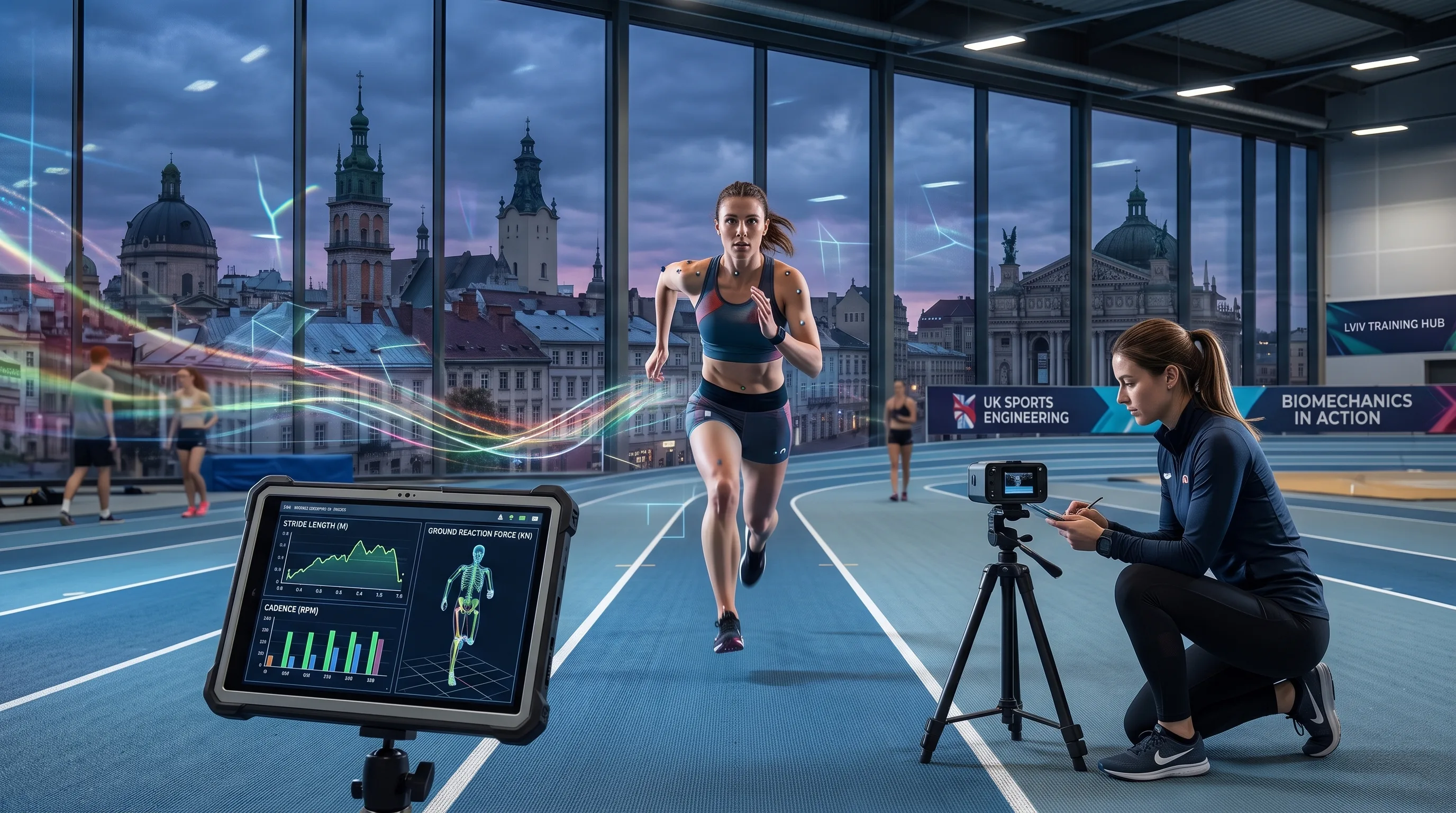
Depth cameras measure distance from the camera to surfaces in the scene. Unlike a regular camera that captures colour and brightness, a depth camera creates a map of how far each point is from the sensor. That distance map makes it easier to detect body parts in three dimensions. Affordable sensors like time-of-flight or structured light devices have opened up new, low-cost ways to track motion. In biomechanics, depth cameras can capture whole-body movements without markers, giving natural behaviour and simpler setups compared with traditional marker-based labs.
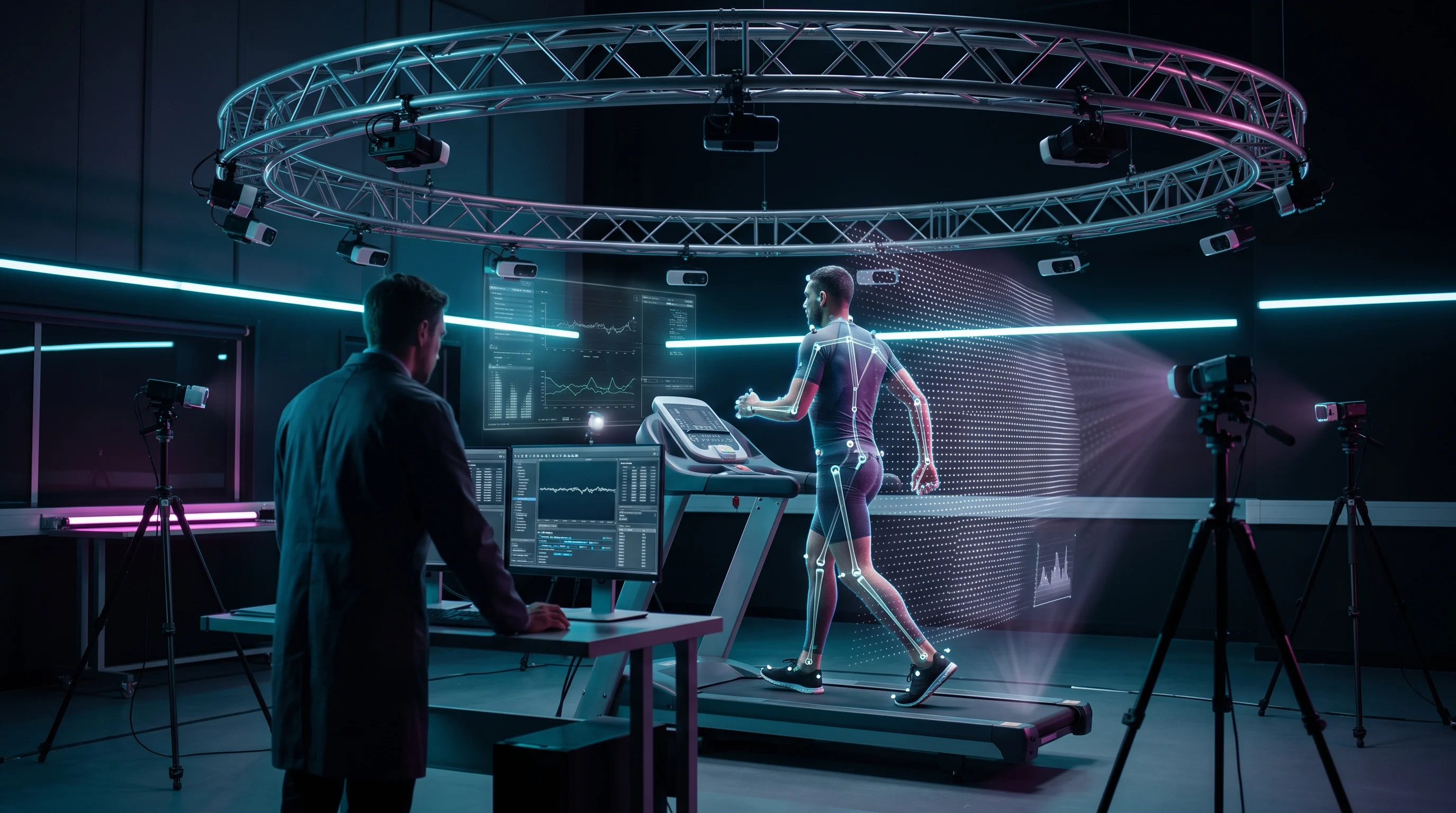
A common example many people recognise is the Microsoft Kinect biomechanics use in research. Although the original Kinect is a consumer device, it drove development of accessible depth sensing and led to many open-source tools for segment tracking technology and joint estimation. Researchers used Kinect-style sensors to collect sports biomechanics data from running, jumping or balance tasks when a full marker lab was not available.
How computer vision motion tracking works in practice
Computer vision motion tracking combines algorithms with sensor input to follow body parts over time. The process typically starts with image capture — RGB images, depth maps or both. Then software detects the person, locates key points such as shoulders, hips and knees, and links those points into a skeletal model. The tracking can be 2D or 3D depending on the data. Depth cameras add the third dimension directly, which simplifies recovering the actual spatial positions of segments.
There are two main approaches: marker-based and markerless. Marker-based systems place reflective markers on anatomical landmarks and use multiple cameras to triangulate each marker in 3D. Markerless methods rely on machine learning and computer vision to estimate joint positions directly from images or depth maps. Segment tracking technology bridges these by using segments or rigid body models to reduce noise and make orientation estimates more stable over time.
3D motion capture technology: options and trade-offs
3D motion capture technology ranges from high-end multi-camera optical systems to single-depth-camera setups. High-end optical systems offer excellent accuracy and are the gold standard for detailed biomechanical analysis. They use many cameras, controllable lighting and reflective markers to get precise marker trajectories. However, they cost a lot, require space and take time to set up.
Depth cameras and computer vision systems offer lower cost and faster workflows. A single depth sensor can provide 3D joint positions and point cloud data for tasks like gait analysis or movement screening. The trade-offs are accuracy and robustness. Depth sensors can struggle with occlusion, reflective clothing, or rapid motions. For many sports engineering research UK projects, though, the convenience outweighs small losses in accuracy — especially when larger sample sizes or in-field testing matter.
Applications in sports engineering research UK
In the UK, universities and applied labs use these technologies in many ways. Sports teams and physiotherapy clinics use depth cameras for quick player screens and return-to-play decisions. Researchers use computer vision motion tracking to collect large datasets for injury risk models or to evaluate performance changes after training. 3D motion capture technology informs footwear design, prosthetics development and the ergonomics of sports equipment.
Because depth cameras are portable, researchers can test athletes on the field, in gyms or in real match environments. That access to natural settings helps produce sports biomechanics data that better reflects real performance, not just lab-constrained behaviour. Combining depth maps with wearable sensors or force plates creates richer datasets for modelling load, joint moments and segment interactions.
Data processing: point cloud modeling and segment tracking
Depth sensors produce point clouds — collections of 3D points that represent surfaces. Point cloud modeling turns these raw points into usable shapes or meshes. For biomechanics, point clouds can help reconstruct limb volumes, align body segments and estimate centre-of-mass positions. Common steps include filtering noise, downsampling points for speed, and fitting geometric primitives or meshes to represent bones and joints.
Segment tracking technology takes joint or surface estimates and links them over time. That reduces jitter and fills short gaps when parts are occluded. Techniques include Kalman filters, rigid-body constraints, and model-based optimisation that enforces anatomical limits. Combining point cloud modelling with segment tracking gives more reliable joint angles and segment velocities, which are the core of sports biomechanics data analysis.
Practical setup: sensors, calibration and recording tips
Setting up a depth-camera system needs attention to sensor placement, lighting and calibration. Place sensors so they cover the motion volume with minimal occlusion. For single-camera setups, position the camera at a slight elevation and angle so limbs don’t hide behind the torso. If using multiple depth cameras, perform a spatial calibration to align their coordinate frames and merge point clouds.
Record a short calibration movement that exposes major joints and segments. Use simple poses or a T-pose to help automated fitting. Check frame rate and latency: sports motions can be fast, so higher frame rates reduce motion blur and tracking errors. Finally, log metadata like subject height, footwear, and surface type — that contextual sports biomechanics data makes later analysis more meaningful.
Common challenges and how to handle them
Data quality is also variable between devices. Consumer sensors might drift or report noisier depth values than industrial units. Always validate your setup with a known standard or a short comparison against a marker-based system when accuracy matters. In sports engineering research UK projects, documenting measurement uncertainty and using statistical models that account for noise will make conclusions more robust.
Best practices for collecting and using sports biomechanics data
Collect consistent, well-documented data. Use standardised protocols for warm-up, task instructions and measurement distances. Save raw depth maps and point clouds in case reprocessing is needed. When analysing, pre-process to remove outliers, filter noise, and normalise time so trials are comparable. For clinical or performance decisions, prioritise repeatability: run multiple trials and report averages rather than a single best take.
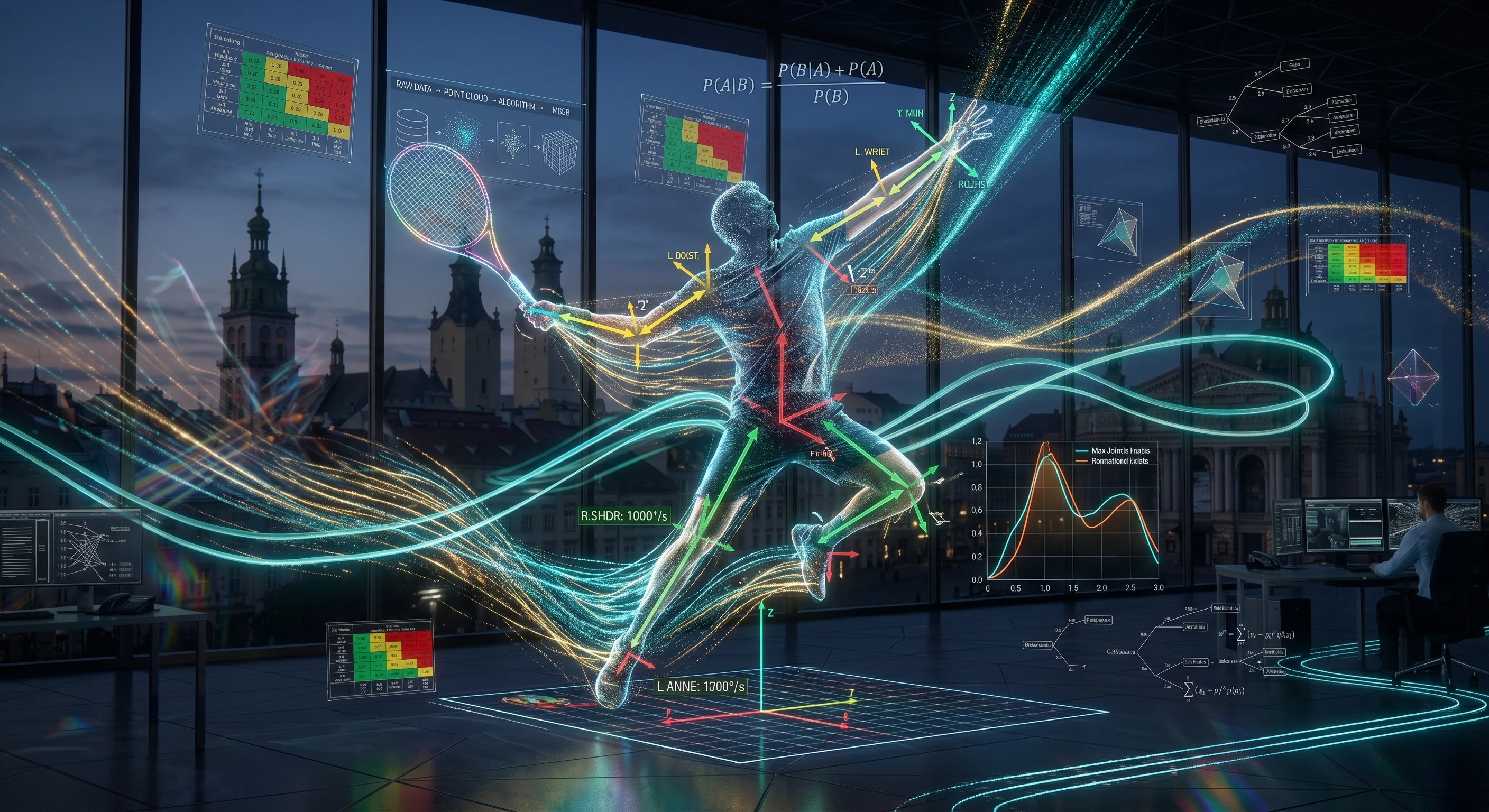
When publishing or sharing data, include details about the sensors, firmware versions, calibration routines, and any processing steps such as smoothing or gap-filling. This transparency helps other researchers replicate results and reuse sports biomechanics data in meta-analyses.
Future directions: AI, real-time feedback and hybrid systems
Machine learning continues to improve markerless tracking accuracy. New algorithms trained on large motion datasets can infer joints even from noisy depth maps or partial views. Real-time feedback systems are becoming practical: coaches can get live metrics for jump height, limb symmetry or joint angles during training sessions. Hybrid systems that fuse depth cameras, wearables and force measurements will offer richer, more robust datasets for performance and injury studies.
In the UK, as sports engineering research grows, expect more field-ready systems tailored to specific sports. Tools that combine point cloud modelling with player-specific biomechanical models will give personalised insights for athletes and patients alike, making advanced biomechanical analysis more widely available.
Conclusion: sensible adoption for better outcomes
Depth cameras, computer vision motion tracking and 3D motion capture technology are changing how biomechanics and sports engineering research is done in the UK. They lower cost, simplify testing and let researchers work in real-world settings. They are not a complete replacement for high-end marker-based labs, but they are powerful tools when used with care. Focus on good sensor placement, clear protocols, and robust data processing — including point cloud modelling and segment tracking technology — to get reliable sports biomechanics data that leads to useful insights.
FAQ
How accurate are depth cameras compared with marker-based systems?
Depth cameras are generally less accurate than multi-camera marker-based systems, especially for precise joint centre locations. They are useful for gross measures, larger datasets and field testing. Accuracy can be improved with calibration, multiple sensors and filtering.
Can I use a single depth camera for running analysis?
You can, but expect limitations with occlusion and speed. Single-camera setups work well for sagittal-plane metrics like stride length and timing. For detailed kinetics or 3D joint angles, use multiple cameras or combine with wearables.
What is point cloud modelling and why is it important?
Point cloud modelling turns raw 3D points from depth sensors into usable shapes or meshes. It helps estimate limb volumes, align segments and calculate centre-of-mass positions, improving the quality of biomechanical measures.
How does segment tracking technology reduce noise?
Segment tracking links joint or surface estimates over time using filters and biomechanical constraints. It enforces consistent orientation and motion patterns, filling short gaps and smoothing jitter for better angle and velocity estimates.
Are these tools suitable for clinical use in physiotherapy?
Yes, for screening and monitoring patient progress they can be very helpful. For clinical decisions that require high precision, supplement them with validated clinical tests or higher-accuracy systems and document measurement uncertainty.
Where can UK researchers find help or collaborations?
Look to university sports engineering departments, NHS biomechanics services, and industry partners. Many UK research groups publish open tools and datasets, and collaborative projects often provide access to shared equipment and expertise.